Revision techniques that actually work (GCSE, A level and uni)

The revision techniques that work best are practice testing, which means answering questions from memory, and spaced practice, which means spreading your revision of each topic over days and weeks. Rereading, highlighting and summarising feel productive but do far less. Here is how to use the ones that work, and a weekly plan you can start today.
What are the best revision techniques?
In 2013, five psychologists reviewed the research on ten popular study techniques and rated how useful each one is for students.1 It is still the clearest guide to where your revision time should go.
Only 2 of 10 techniques earned the review's top rating: practice testing and distributed (spaced) practice.
| Technique | What you do | Rating |
|---|---|---|
| Practice testing | Answer questions from memory: past papers, flashcards, blank-page recall | High |
| Spaced practice | Come back to each topic over days and weeks | High |
| Interleaving | Mix topics or problem types in one session | Moderate |
| Self-explanation | Explain each step or idea in your own words | Moderate |
| Asking why | Ask why each fact is true, then answer | Moderate |
| Summarising | Write shorter versions of your notes | Low |
| Highlighting | Mark key lines in notes or textbooks | Low |
| Rereading | Read your notes or textbook again | Low |
The pattern is simple: techniques that make you produce an answer beat techniques that have you look at the material again.
How do you revise with practice testing?
Practice testing means closing your notes and making yourself recall the answer before you check it. In a classic experiment, students who tested themselves on a text remembered more of it a week later than students who spent the same time rereading it, even though rereading looked better on a test five minutes after studying.2 A 2017 meta-analysis that pooled many such experiments came to the same conclusion: practice tests helped learning more than restudying.3
Three ways to do it:
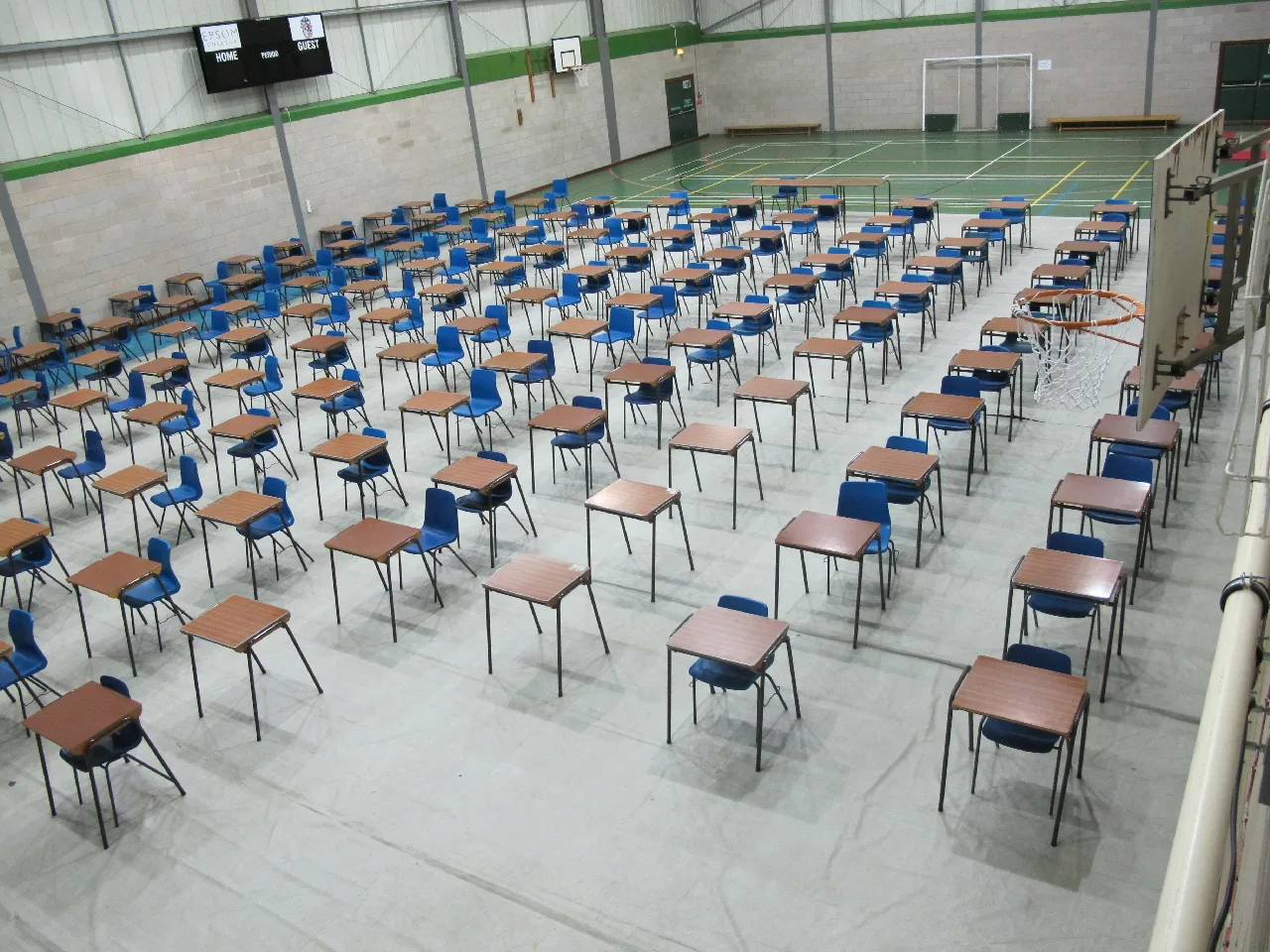
- Past papers under timed conditions. The closest thing to the real exam. Mark them with the mark scheme, then redo the questions you dropped marks on a few days later.
- Flashcards. One question per card. Say or write the answer before you turn it over.
- Blank-page recall. Write everything you remember about a topic on a blank sheet, then fill the gaps from your notes in another colour.
For five methods in more depth, see active recall: how to actually do it.
How do you space out your revision?
Spaced practice means coming back to the same topic several times with gaps in between, instead of covering it once in one long block. It feels less efficient, because you have forgotten a little each time, but that effort of remembering is what makes it stick.
How long should the gaps be? It depends on how far away the exam is. In one large study, the best gap was about 20 to 40% of the time until the test when the test was a week away, falling to about 5 to 10% when it was a year away.4 In practice:
- Mocks in two weeks: review each topic every few days.
- Summer exams, months away: come back to each topic every two to three weeks, and more often as May gets closer.
Should you mix topics when you revise?
Often, yes. Interleaving means mixing different topics or problem types in one session, for example alternating differentiation, integration and trigonometry questions instead of doing twenty of one kind. In one maths experiment, students who practised mixed problem types did worse during practice but much better on a test a week later than students who practised one type at a time.5 Mixing forces you to work out which method each question needs, which is exactly what the exam asks.
Most of the evidence comes from maths problems, so use it in subjects where you have to choose a method, rather than as a rule for everything.1
Does explaining it in your own words help?
Yes. Explaining how and why something works, step by step, is what researchers call self-explanation, and asking yourself why each fact is true is called elaborative interrogation. Both were rated moderately useful.1 The test is simple: if you cannot explain an idea without your notes, you do not know it yet, and you have just found what to revise next.
Which revision techniques waste time?
Rereading, highlighting and summarising were all rated low.1 They are not useless, but they feel more productive than they are: rereading makes the page familiar, and familiar is easy to mistake for remembered. If you like making notes or summaries, treat them as the material you then test yourself on, not as the revision itself.
How do you plan a revision week?
A plan built on the high-rated techniques fits on one page:
- List your topics for each subject and mark the ones you feel least sure about.
- Give each session one or two topics, and spread subjects across the week rather than giving each one a whole day.
- Start every session with recall: blank-page recall or flashcards on what you covered last time, before anything new.
- Come back to each topic a few days later, then again the following week.
- End the week with a timed past paper or practice questions, and pick next week's topics from what you got wrong.
Test yourself
Answer these from memory before you open the answers.
Answer from memory, then tap a question to check.
1. Which two techniques got the top rating in the 2013 review?
Practice testing and spaced (distributed) practice.
2. Why can rereading feel as if it works?
It makes the page familiar, and familiar is easy to mistake for remembered. In the classic experiment, rereading only looked better on a test five minutes later; a week later, self-testing won.
3. Your exams are months away. Roughly how often should you come back to a topic?
About every two to three weeks, and more often as the exams get closer.
4. What is interleaving, and where is it most useful?
Mixing topics or problem types in one session. It is most useful where you have to choose a method, as in maths problems.
5. What should you do with the notes and summaries you have made?
Use them as material to test yourself on, not as the revision itself.
Sources
- Dunlosky, J., Rawson, K. A., Marsh, E. J., Nathan, M. J. and Willingham, D. T. (2013). Improving Students’ Learning With Effective Learning Techniques: Promising Directions From Cognitive and Educational Psychology. Psychological Science in the Public Interest, 14(1), 4–58.
- Roediger, H. L. and Karpicke, J. D. (2006). Test-Enhanced Learning: Taking Memory Tests Improves Long-Term Retention. Psychological Science, 17(3), 249–255.
- Adesope, O. O., Trevisan, D. A. and Sundararajan, N. (2017). Rethinking the Use of Tests: A Meta-Analysis of Practice Testing. Review of Educational Research, 87(3), 659–701.
- Cepeda, N. J., Vul, E., Rohrer, D., Wixted, J. T. and Pashler, H. (2008). Spacing Effects in Learning: A Temporal Ridgeline of Optimal Retention. Psychological Science, 19(11), 1095–1102.
- Rohrer, D. and Taylor, K. (2007). The Shuffling of Mathematics Problems Improves Learning. Instructional Science, 35(6), 481–498.